
How to Delete Moodunits
Published by: Rob JacksonRelease Date: April 11, 2021
Need to cancel your Moodunits subscription or delete the app? This guide provides step-by-step instructions for iPhones, Android devices, PCs (Windows/Mac), and PayPal. Remember to cancel at least 24 hours before your trial ends to avoid charges.
Guide to Cancel and Delete Moodunits
Table of Contents:
Moodunits Unsubscribe Instructions
Unsubscribing from Moodunits is easy. Follow these steps based on your device:
Canceling Moodunits Subscription on iPhone or iPad:
- Open the Settings app.
- Tap your name at the top to access your Apple ID.
- Tap Subscriptions.
- Here, you'll see all your active subscriptions. Find Moodunits and tap on it.
- Press Cancel Subscription.
Canceling Moodunits Subscription on Android:
- Open the Google Play Store.
- Ensure you’re signed in to the correct Google Account.
- Tap the Menu icon, then Subscriptions.
- Select Moodunits and tap Cancel Subscription.
Canceling Moodunits Subscription on Paypal:
- Log into your PayPal account.
- Click the Settings icon.
- Navigate to Payments, then Manage Automatic Payments.
- Find Moodunits and click Cancel.
Congratulations! Your Moodunits subscription is canceled, but you can still use the service until the end of the billing cycle.
Potential Savings for Moodunits
Knowing the cost of Moodunits's in-app purchases helps you save money. Here’s a summary of the purchases available in version 1.60:
| In-App Purchase | Cost | Potential Savings (One-Time) | Potential Savings (Monthly) |
|---|---|---|---|
| MU Waverley ARC | $0.00 | $0.00 | $0 |
| MU Waverley ESC | $0.00 | $0.00 | $0 |
| MU Waverley Factory | $0.00 | $0.00 | $0 |
| MU Waverley GRANALOG | $0.00 | $0.00 | $0 |
| MU Waverley MegaPortaPad | $0.00 | $0.00 | $0 |
| MU Waverley Mellopiano | $0.99 | $0.99 | $12 |
| MU Waverley Mobass | $0.00 | $0.00 | $0 |
| MU Waverley Pianoatmos | $0.99 | $0.99 | $12 |
| MU Waverley Scapers | $0.00 | $0.00 | $0 |
| MU Waverley Stringz | $0.99 | $0.99 | $12 |
Note: Canceling your subscription does not remove the app from your device.
How to Delete Moodunits - Rob Jackson from Your iOS or Android
Delete Moodunits from iPhone or iPad:
To delete Moodunits from your iOS device, follow these steps:
- Locate the Moodunits app on your home screen.
- Long press the app until options appear.
- Select Remove App and confirm.
Delete Moodunits from Android:
- Find Moodunits in your app drawer or home screen.
- Long press the app and drag it to Uninstall.
- Confirm to uninstall.
Note: Deleting the app does not stop payments.
How to Get a Refund
If you think you’ve been wrongfully billed or want a refund for Moodunits, here’s what to do:
- Apple Support (for App Store purchases)
- Google Play Support (for Android purchases)
If you need help unsubscribing or further assistance, visit the Moodunits forum. Our community is ready to help!
What is Moodunits?
What does mood units app for ios sound like plus automating midi transpose tips:
More about moodunits...
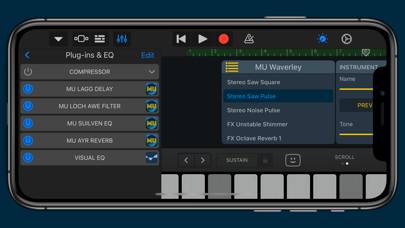
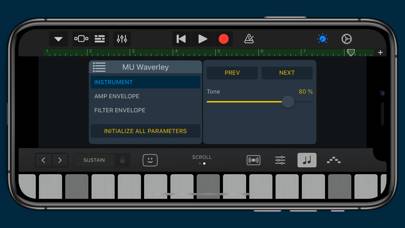
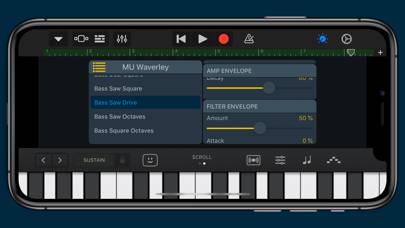
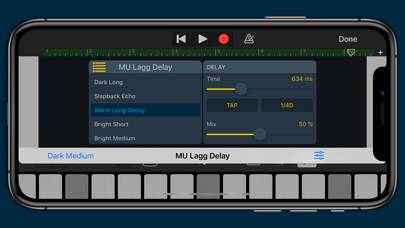
Waverley is the principal instrument in the moodunits collection. It’s sample-based, but it isn’t a fully-fledged sampling app that allows you to load and edit your own samples. There are already great apps out there that allow you to do that.
Waverley in moodunits is pre-loaded with 30 factory sounds, that can be tweaked to taste via parameters that will hopefully be familiar to most of you. However, don’t worry if some parameter names look technical or scary - just experiment! You can’t really “break” Waverley or make “bad” sounds with it.
Probably the most popular type of sounds used in iOS music making come from analog synthesisers. Sometimes these sounds are generated by modelling but in Waverley’s case, the factory instruments come from samples of real analog gear. On the one hand, it’s really easy to mathematically generate a perfect saw wave, but sometimes the problem is that it sounds… perfect. Analog synthesisers tend to produce less than perfect waveforms, and it’s generally agreed that’s a big part of what makes them sound “good”.