Come eliminare Sentient Synthesizer
Pubblicato da: Valery MironovData di rilascio: September 08, 2026
Devi annullare il tuo abbonamento a Sentient Synthesizer o eliminare l'app? Questa guida fornisce istruzioni dettagliate per iPhone, dispositivi Android, PC (Windows/Mac) e PayPal. Ricordati di annullare almeno 24 ore prima della fine del periodo di prova per evitare addebiti.
Guida per annullare ed eliminare Sentient Synthesizer
Sommario:


Sentient Synthesizer Istruzioni per annullare l'iscrizione
Annullare l'iscrizione a Sentient Synthesizer è facile. Segui questi passaggi in base al tuo dispositivo:
Annullamento dell'abbonamento Sentient Synthesizer su iPhone o iPad:
- Apri l'app Impostazioni.
- Tocca il tuo nome in alto per accedere al tuo ID Apple.
- Tocca Abbonamenti.
- Qui vedrai tutti i tuoi abbonamenti attivi. Trova Sentient Synthesizer e toccalo.
- Premi Annulla abbonamento.
Annullamento dell'abbonamento a Sentient Synthesizer su Android:
- Apri il Google Play Store.
- Assicurati di aver effettuato l'accesso all'Account Google corretto.
- Tocca l'icona Menu, quindi Abbonamenti.
- Seleziona Sentient Synthesizer e tocca Annulla abbonamento.
Annullamento dell'abbonamento a Sentient Synthesizer su Paypal:
- Accedi al tuo conto PayPal.
- Fai clic sull'icona Impostazioni.
- Vai a Pagamenti, quindi Gestisci pagamenti automatici.
- Trova Sentient Synthesizer e fai clic su Annulla.
Congratulazioni! Il tuo abbonamento a Sentient Synthesizer è stato annullato, ma puoi comunque utilizzare il servizio fino alla fine del ciclo di fatturazione.
Come eliminare Sentient Synthesizer - Valery Mironov dal tuo iOS o Android
Elimina Sentient Synthesizer da iPhone o iPad:
Per eliminare Sentient Synthesizer dal tuo dispositivo iOS, segui questi passaggi:
- Individua l'app Sentient Synthesizer nella schermata iniziale.
- Premi a lungo l'app finché non vengono visualizzate le opzioni.
- Seleziona Rimuovi app e conferma.
Elimina Sentient Synthesizer da Android:
- Trova Sentient Synthesizer nel cassetto delle app o nella schermata iniziale.
- Premi a lungo l'app e trascinala su Disinstalla.
- Conferma per disinstallare.
Nota: l'eliminazione dell'app non interrompe i pagamenti.
Come ottenere un rimborso
Se ritieni che ti sia stato addebitato un importo erroneamente o desideri un rimborso per Sentient Synthesizer, ecco cosa fare:
- Apple Support (for App Store purchases)
- Google Play Support (for Android purchases)
Se hai bisogno di aiuto per annullare l'iscrizione o ulteriore assistenza, visita il forum Sentient Synthesizer. La nostra comunità è pronta ad aiutare!
Cos'è Sentient Synthesizer?
When a new sound is analyzed, the neuron that best matches it updates its internal representation and `swells` more than the others. Nearby neurons also update, but less strongly, forming a smooth sound space inside the network.
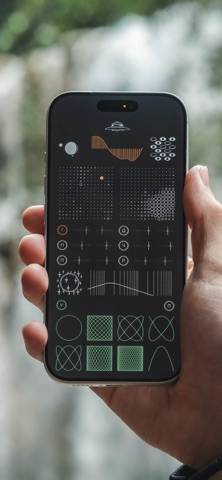
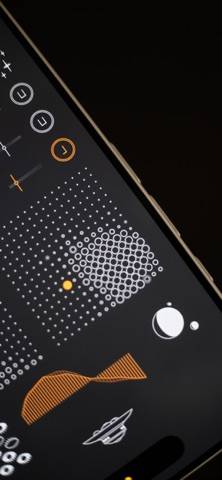
Two grids represent the two `hemispheres` of the neural network. Each cell corresponds to a neuron. Tapping a cell selects the neuron whose waveform will be used. An orange dot marks the selected neuron, and the curve above it shows the fragment of waveform stored by that neuron — the wavetable used to generate notes or modulate parameters.
The controller with the planets manages memories. Dragging it moves through time and lets you browse stored states. A double tap returns to the present moment. A long tap opens a menu with three actions marked by Russian letters: `С` for save from sohranit, `У` for delete from udalit, and `З` for close from zakryt.
The planet interface represents time symbolically. The crescent shadow shows the time of day, the moon’s position indicates the day of the month, and the satellite’s position represents the orbital period of an artificial body similar to the ISS.